
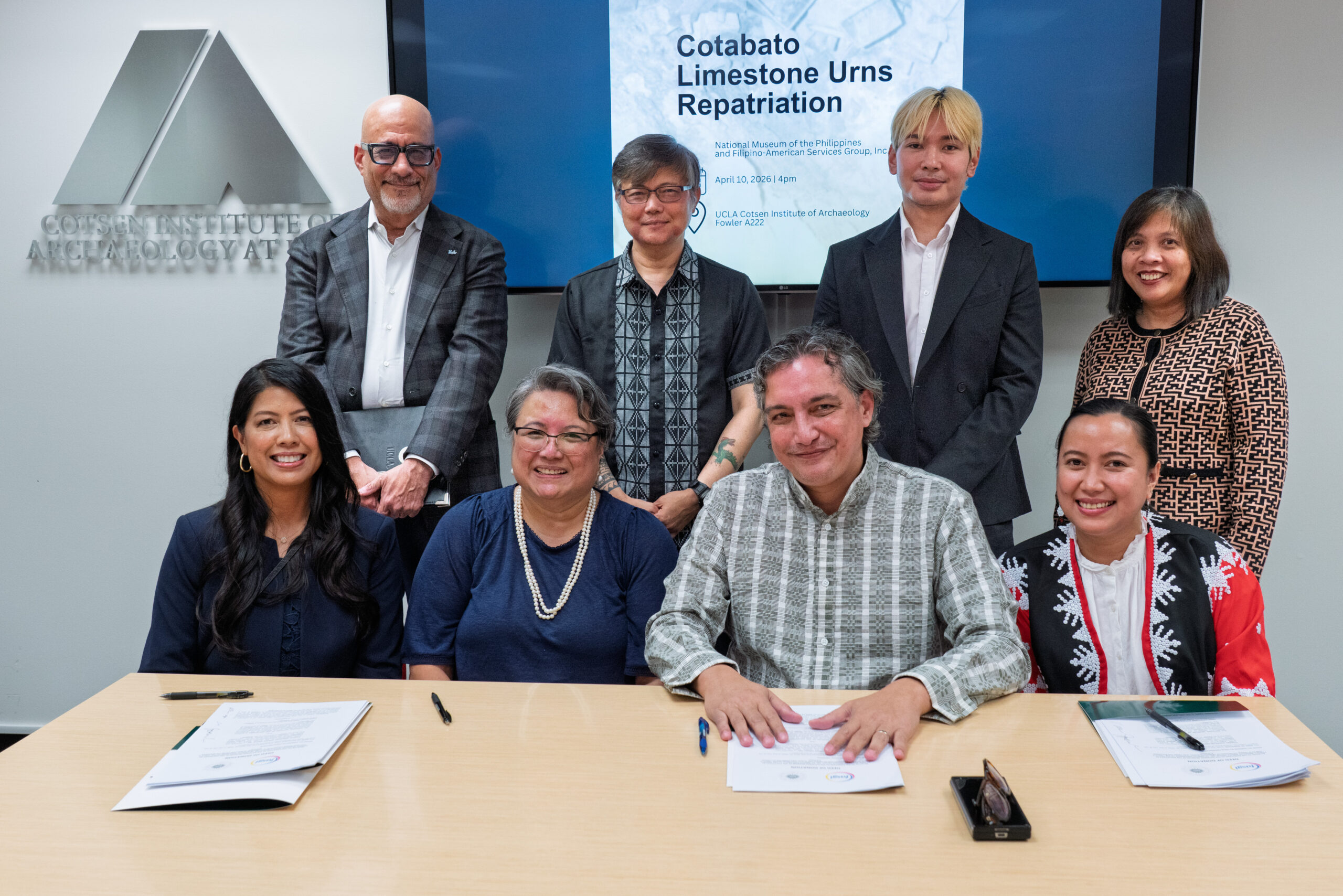
The artifacts are part of the larger Sally von Dem Hagen Collection discovered during hunting expedition in the 1970s
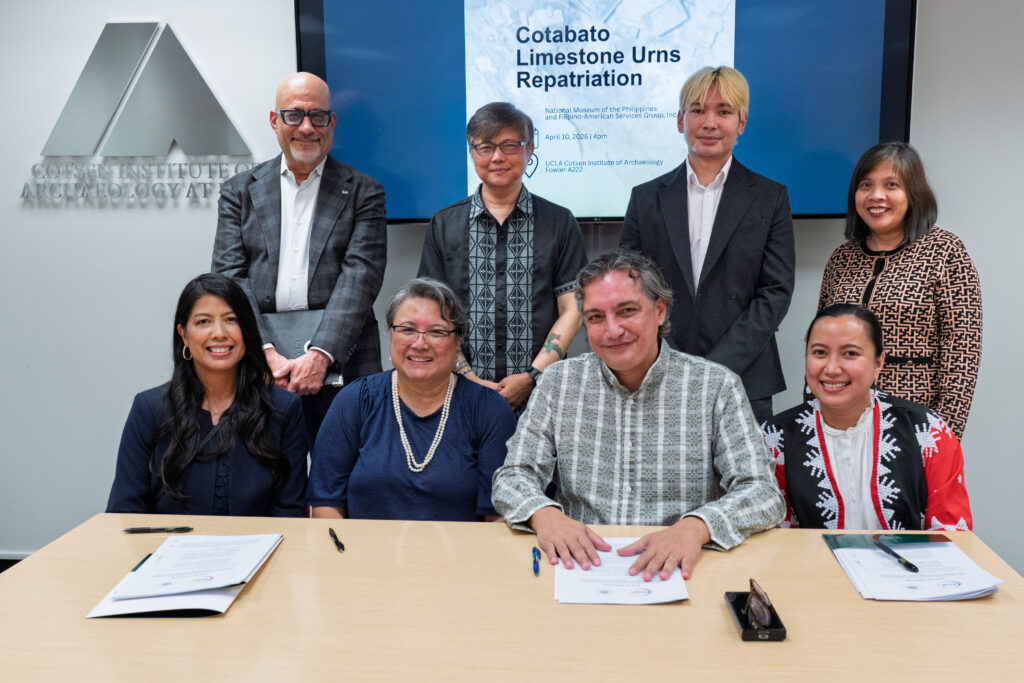
Seated, left to right, Celina Duffy, Yey Coronel-Alcid, Jeremy Barns, Marianne Ubalde-Baclor.
Photo: Paul Connor/UCLA Social Sciences
UCLA Cotsen Institute of Archaeology
Eight remaining artifacts from the Sally A. von dem Hagen Collection of limestone burial objects from the Kulaman Plateau in Cotabato were formally repatriated to the Philippines at a ceremony hosted by UCLA’s Cotsen Institute of Archaeology held on April 10.
At the event held at the Fowler Museum at UCLA, Yey Coronel-Alcid, former executive director of the Filipino American Services Group, Inc. (FASGI), turned over the artifacts to Director-General Jeremy Barns of the National Museum of the Philippines. The turnover was witnessed by Celina Duffy, chairperson of FASGI, and Marianne Ubalde-Baclor, director of the National Museum of Anthropology of the Philippines. The event marked the return of the final pieces of the collection that had remained in the United States under the care of FASGI, with representatives from the Philippine Consulate General in Los Angeles, Consul Levi Malaylay and Cultural Officer Bembit Villa, in attendance.
The repatriation process involved collaboration among several institutions and individuals, including the National Museum of the Philippines, Philippine Consulate General in Los Angeles, FASGI and UCLA’s Cotsen Institute of Archaeology, where the artifacts were temporarily safeguarded prior to their return. The ceremony symbolized the completion of this effort and highlights the role of diaspora organizations and academic institutions in safeguarding cultural heritage while facilitating its return to its country of origin.
“This repatriation is symbolic in many ways,” said Stephen Acabado, chair of UCLA’s Archaeology Interdepartmental Program and director of Center for Southeast Asian Studies. “For decades, these objects were separated from the communities and landscapes where they were created and used. Returning them restores an important connection between heritage and place.”
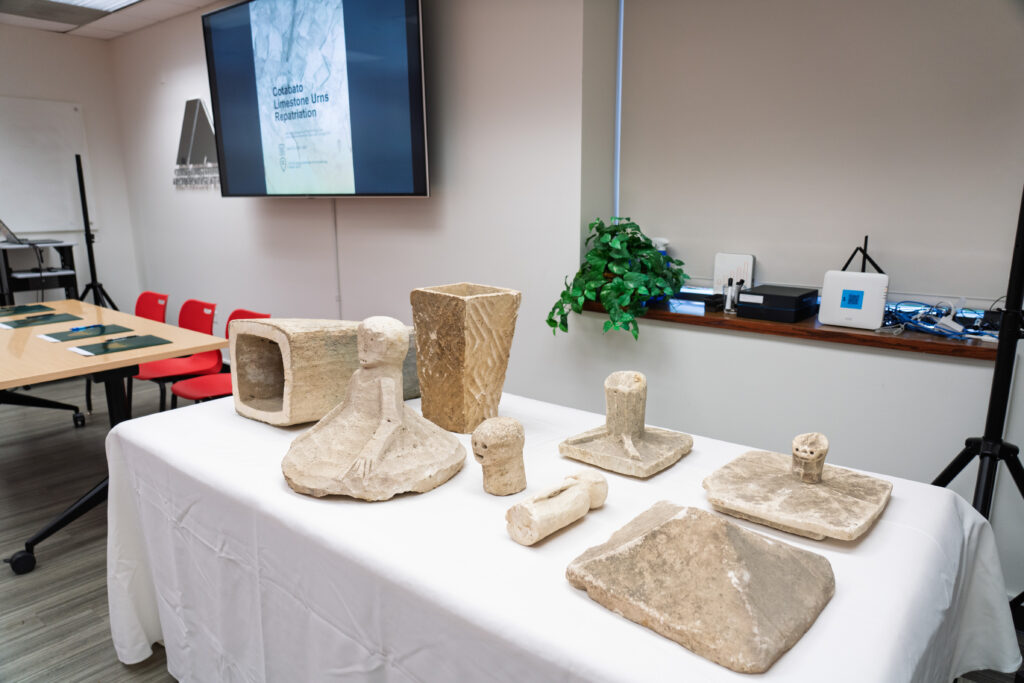
The artifacts are part of the larger Sally von dem Hagen Collection, a group of limestone burial jars and associated objects originating from the Kulaman Plateau in what is now Sultan Kudarat, Mindanao, a mountainous region that remains home to Manobo communities whose cultural traditions continue to shape the social and historical landscape of the area. The artifacts were acquired in the early 1970s by American businesswoman Sally von dem Hagen after Dulangan Manobo hunters discovered them in caves during a hunting expedition. When von dem Hagen left the Philippines in 1979, she brought the objects with her to the United States, where they remained for decades.
In 2024, most of the collection—52 limestone burial jars and related objects—was repatriated and officially transferred to the National Museum of the Philippines through the initiative of von dem Hagen’s children and in collaboration with scholars, cultural institutions, UCLA students enrolled in a class titled “Collaborative and Community-Engaged Archaeology” that produced a virtual exhibit as part of this effort and members of the Filipino American community.
“The limestone ossuaries are unique within Philippine archaeology,” said Acabado. “Unlike most burial jars in the country, which are made of clay, the Kulaman examples are carved from limestone blocks and date to approximately the mid-first millennium C.E., reflecting burial traditions practiced in parts of Mindanao during around 1,500-2,000 years ago.”
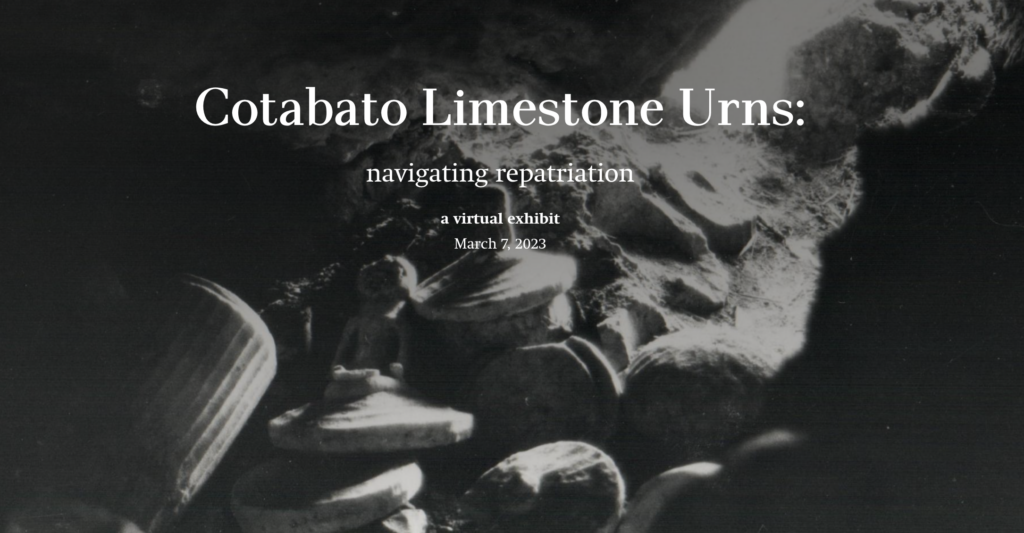
In 2023, UCLA students enrolled in a class titled “Collaborative and Community-Engaged Archaeology,” produced a virtual exhibit to document the repatriation process: Cotabato Limestone Urns: Navigating Repatriation.
Once received by Director-General Barns, the eight artifacts will be transferred to the National Archaeological Collection of the National Museum of the Philippines, where they will join the rest of the repatriated von dem Hagen materials. The objects will contribute to ongoing research on ancient burial practices, stone-carving technologies and the complex cultural histories of Mindanao. The collection can be viewed at the National Museum of Anthropology of the Philippines.
“By working with partners in the Philippines and the Filipino American community, we can help ensure that these materials return to the institutions and communities where they hold the greatest significance,” said Acabado.
The recent ceremony underscores the importance of cooperation between scholars, cultural institutions and diaspora communities in ensuring that heritage objects are treated with respect and returned to the public domain where they can be studied and appreciated.
“Events like this show how universities can contribute to responsible stewardship of cultural heritage,” said Abel Valenzuela, dean of UCLA’s Division of Social Sciences. “It’s an example of UCLA’s commitment to archaeological practices that respect communities and a recognition that heritage objects carry meaning beyond the academy.”