Deportations have more than quadrupled, ICE street arrests up elevenfold, new report shows
Through the John Lewis Young Leaders (JLYL) program she hopes to offer theater-based civic engagement classes for youth

Citlalli Chávez-Nava
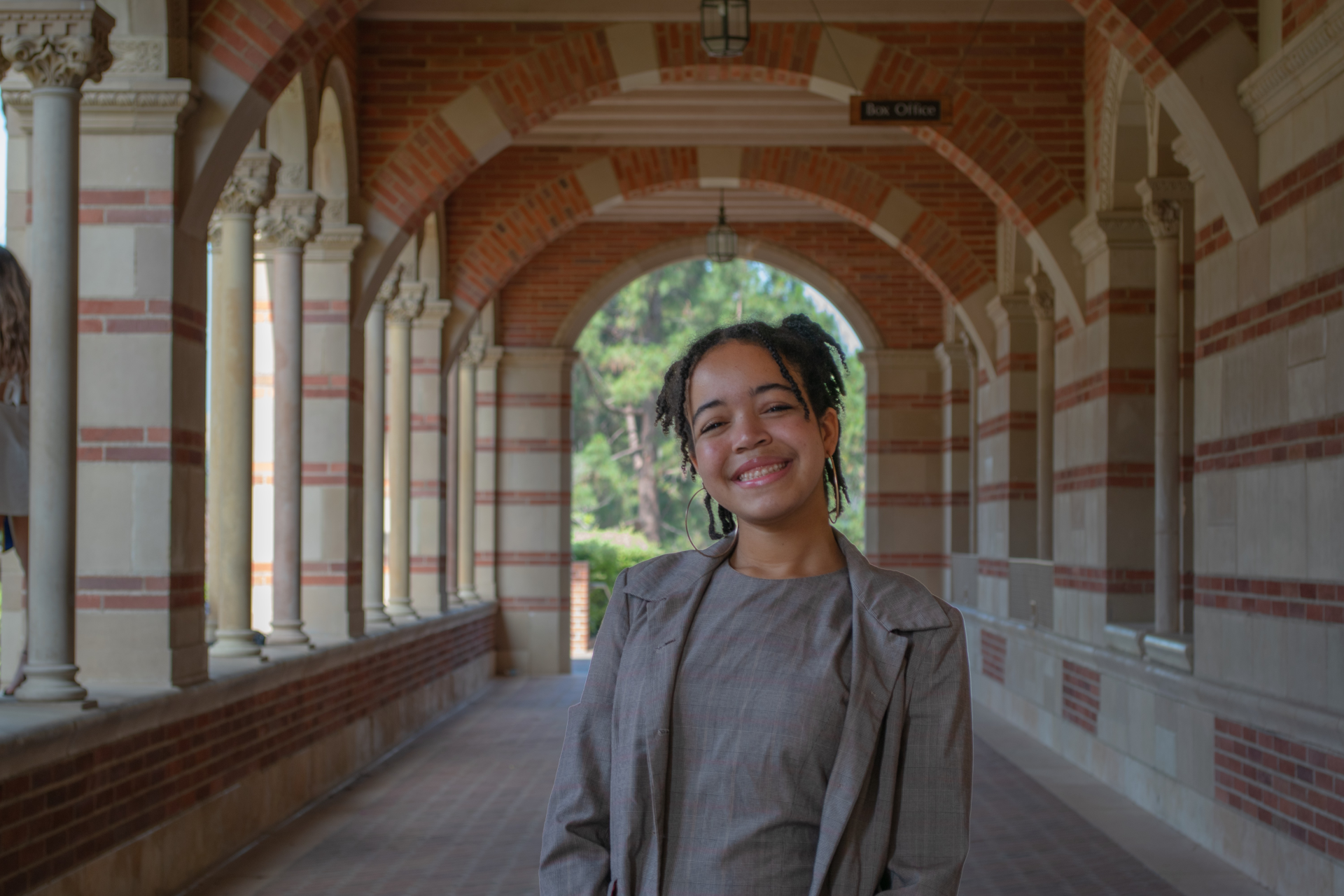
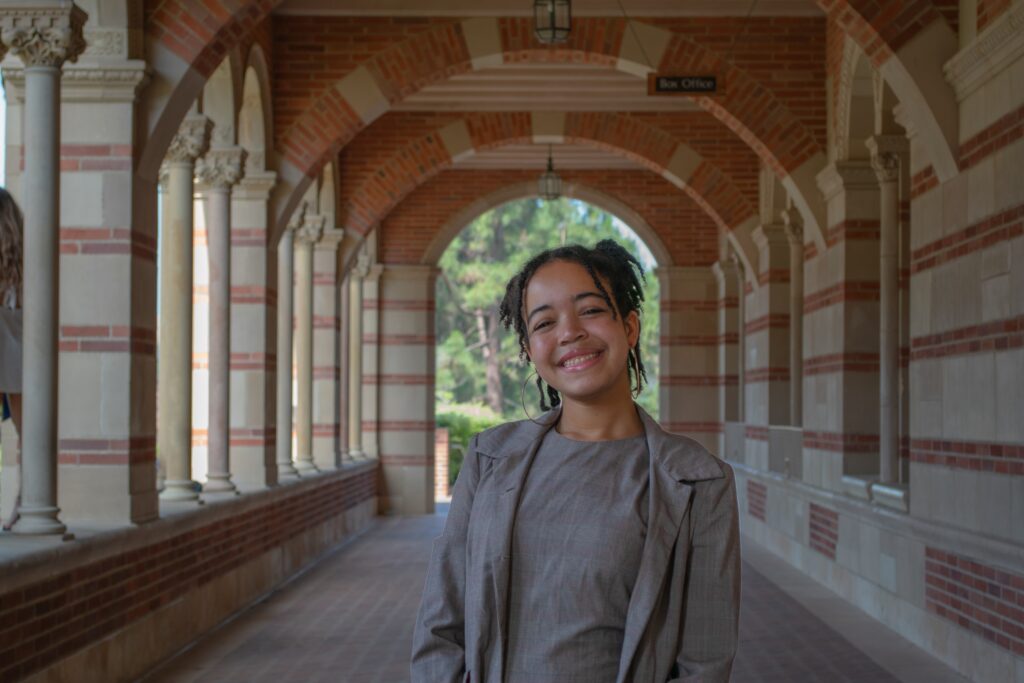
Chania Rene-Corail, a second-year political science and international development studies major, was named a 2025-26 fellow for Robert F. Kennedy Human Rights’ John Lewis Young Leaders program (JLYL), a year-long undergraduate fellowship that prepares college students for a future in community organizing and civic engagement.
Selected among a highly competitive pool of over 550 applicants, Rene-Corail will join 15 other students from public and private universities across the country in this year’s cohort. During the program, fellows engage their campus and local communities in human rights work through a capstone project. They also gain access to comprehensive grassroots organizing workshops, 1:1 mentorship from RFK Human Rights staff, financial support and access to an extensive network of human rights professionals, peers and program alumni.
“This year’s cohort is an extraordinary group of young people, and I’m inspired by their courage, kindness and commitment to making our country a more just and equitable place,” said Kerry Kennedy, president of RFK Human Rights. “I’m filled with hope as we welcome this next generation of leaders into the fold.”
Civic engagement through theater
A believer in the power of using art for political expression, Rene-Corail plans to partner with a local organization to offer theater-based civic engagement workshops for youth for her JLYL capstone project. She hopes to bring the program to youth that have traditionally lacked access to theater and other arts education resources to develop productions that reflect their own lived experiences.
“I want to highlight the issues that are important to the youth — issues that they may have a personal connection with,” she said. “We might even start having discussions about issues that I might not have thought were initially relevant, so this will be an interesting learning experience not only for participants but also for me.”
She hopes participants walk away with both the confidence to use the arts for social action and to also develop practical skills such as scriptwriting, public speaking, set design and other production skills that they can apply to other civic engagement and professional settings in the future.
“My ultimate goal with this project is to create a new generation of creative changemakers, uniting communities and encouraging students to be the best version of themselves, whether that be through improved social emotional learning, heightened educational achievement or unlocking their passion for social engagement,” she added.
A lifelong connection to theater

The daughter of French-Caribbean parents, Rene-Corail grew up near Paris and was introduced to theater when her mother enrolled her in classes at age 2. Although she holds only vague memories of her first performances as a child, the large stage and the size of the audience left an impression on her. Since then, theater has been a recurring part of her life, with Rene-Corail returning to acting and production whenever the opportunity has arisen.
At age 12, Rene-Corail moved to the U.S. when a new job opportunity brought her father to California. The move and the onset of the COVID-19 pandemic soon after introduced new challenges and opportunities to her life.
Initially, she doubted her language skills and her ability to perform a full play in English, so she stepped away from theater for a while. But by high school, she picked it up again and began exploring new aspects of theater such as writing and directing.
Now, she’s involved in UCLA’s student-run HOOLIGAN Theater Company, which is focused on revitalizing, educating and enriching the theater community at UCLA and beyond. Last year, she served as assistant director to “Curtains” and the “SpongeBob Musical” as well as dancing in the spring showcase.
Finding her academic home at UCLA
UCLA hadn’t been on top of Rene-Corail’s list when considering her university studies. But after receiving an invitation to attend a Black excellence event for prospective high school seniors, she enjoyed her visit and grew fond of the campus. Soon after, she discovered that she could pursue her academic interests through a double major in political science and international development studies.
“It was exactly what I wanted to study,” said Rene-Corail. “And it was an opportunity to get an amazing education.”
In the political science department, Rene-Corail is taking courses within the race and ethnicity studies concentration. In her classes, she feels inspired by peers who, like her, are looking for careers that advance the broader public good rather than personal success.
Race and Indigeneity Learning Cluster Teaching Fellow, Antwann Michael Simpkins, has been Rene-Corail’s instructor in a number of seminars. He thinks she is a thoughtful, engaged student with vast leadership abilities. In his recent 10-week seminar Rene-Corail led a group project and a related classroom presentation and throughout she was generous with her time, sharing resources and providing guidance to peers who needed additional support.
“Chania is among the top students I have the pleasure of teaching in my many years in education,” said Michael Simpkins. “She is unquestionably a rising scholar who will undoubtedly make meaningful contributions not only to her most immediate context but also the world more broadly.”
As Rene-Corail begins her JLYL fellowship this fall, she hopes her theater-based project will bring the same inspiration she has found at UCLA to empower youth participants to commit to a cause larger than themselves.
“Oftentimes, young people are being told: ‘You’re the future of our society. We’re counting on you to make our world a better place,’ but at the same time, we’re not providing them with the tools to do so. So, my project aims to change that.”
Victoria Gutierrez’s senior research examines how Salton Sea residents organize to overcome poverty, environmental challenges

Sean Brenner | May 7, 2025
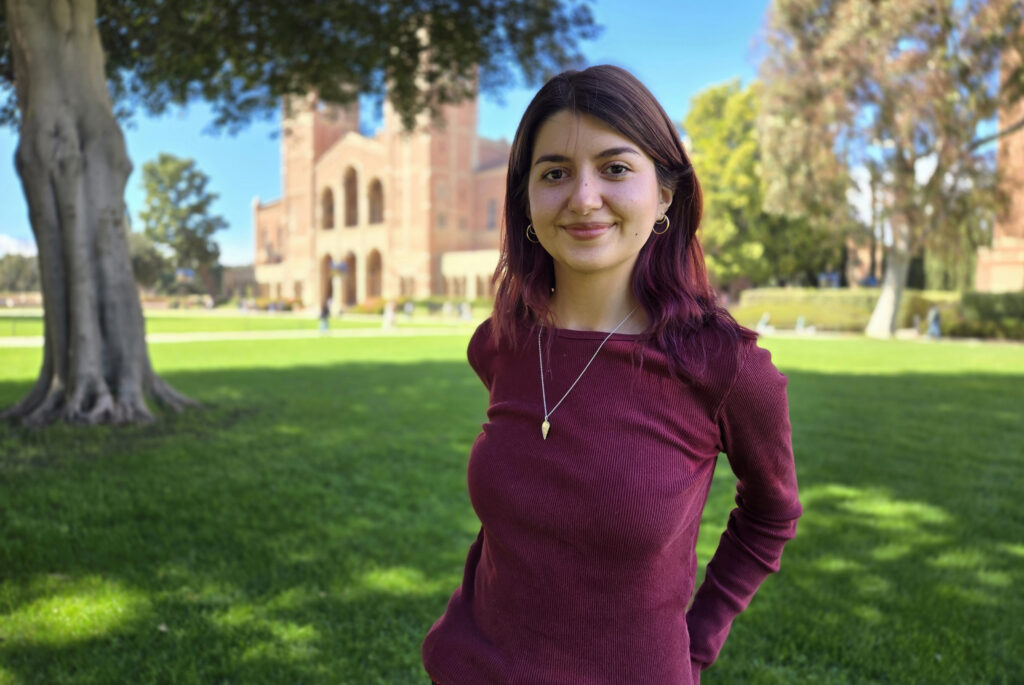
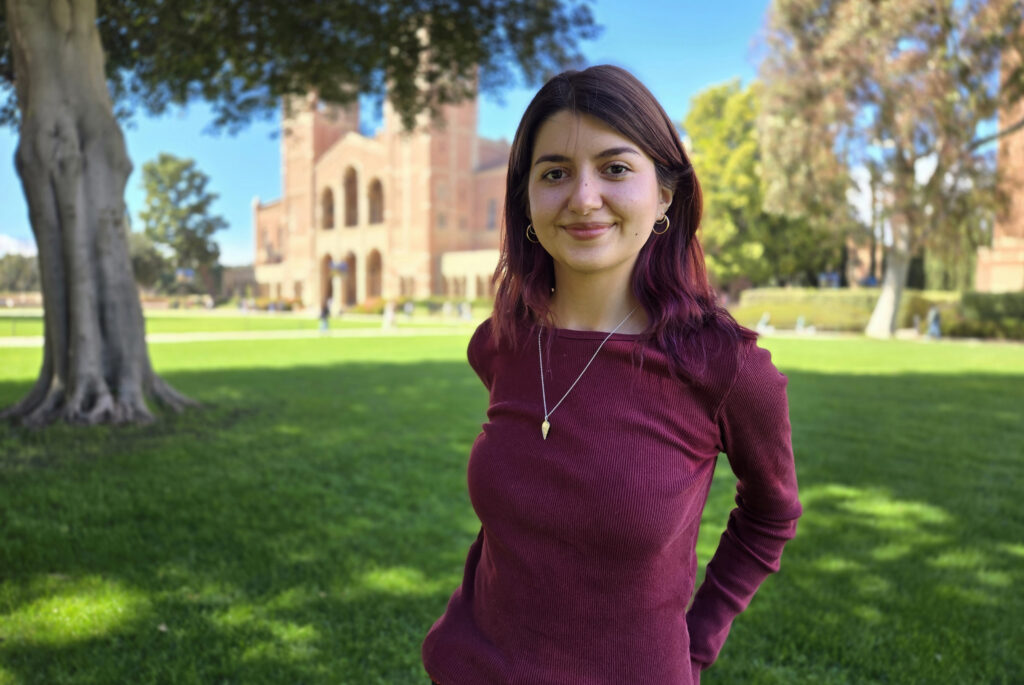
The research project Victoria Gutierrez is completing as a UCLA senior was inspired by a set of photographs she saw years before she set foot on campus.
As a 14-year-old, Gutierrez came across pictures of Salvation Mountain, the massive, colorfully painted folk art installation in the midst of a barren desert landscape in the Salton Sea region of southern California.
“I remember thinking, ‘What is this place? I have to go there,’” she said. The thought stayed with her over the next few years, and she pondered the small communities of people living there.
“It’s very beautiful, but it’s very desolate, plants don’t really grow and it’s known for having toxic dust that comes from the Salton Sea,” Gutierrez said. “I just wondered, how do people live there, how do they cook, how do they do this? Those questions just lived in my brain for a long time.”
Shortly after Gutierrez arrived at UCLA — the Rhode Island native transferred in 2023 from Saddleback College — the opportunity to explore those questions arose. Determined to pursue her own research project, she set up a meeting at the Undergraduate Research Center. It was there that a UCLA graduate student named Jewell Humphrey suggested that Gutierrez think about what questions she had always wanted to find answers to.
The Salton Sea came immediately to mind.
After she discussed possible research approaches with UCLA anthropology professors Jason De León and Jason Throop, Gutierrez had a concept for a sophisticated anthropological study. The project, which is supported by the UCLA/Keck Humanistic Inquiry Undergraduate Research Program, focuses on how residents of Bombay Beach and Slab City cope with the ecological damage, extreme poverty and limited government support they face — and how they organize in an attempt to overcome those challenges.
“Victoria’s project seeks to understand the experiences of those living on the margins in rural California and how people attempt to build community in places where infrastructure, poverty and climate change work to disrupt social networks,” said De León, who also has a faculty appointment in Chicana and Chicano studies and is a member of the Cotsen Institute of Archeology.
“As we move into a new era of climate change whereby the haves and have-nots differentially experience things like droughts, rising temperatures and other catastrophic environmental events, projects such as Victoria’s will become increasingly important. I applaud her for tackling such an important social issue.”

Over the past year, Gutierrez has conducted dozens of interviews with residents and spent weeks living among them, even volunteering at a cooling center — a climate-controlled trailer where locals can escape the oppressive heat.
“I’d do 12-hour shifts, just making sure the air conditioning was on,” she said. “People would come in, and I would get to talk to them for really long periods of time.”
Initially, Gutierrez planned to focus on the role of climate change in the region, but she changed gears when she realized residents were more focused on their efforts to improve their communities. One woman she interviewed was applying for grants to build a park in Bombay Beach.
“I was really inspired by how these people kept wanting to do better for themselves, even in the face of seemingly insurmountable obstacles,” said Gutierrez, a political science major and anthropology minor.
Her study also highlights the stark realities of poverty. Many residents told her they had ended up in the area mostly because they had nowhere else to go. She recounted the story of one woman, Belinda, who had been arrested as a teenager and never had access to formal education.
“She is functionally illiterate, has no degree and suffers from severe health conditions,” Gutierrez said. “If she lived in L.A., she’d probably be in far worse conditions. But in Bombay Beach, she’s welcomed and seen as a respectable member of society.”

Gutierrez’s study is timely: In January, a judge cleared the way for a long-planned project that will mine large amounts of lithium from the ground beneath the Salton Sea. Lithium is an essential component of electric car batteries, mobile phones and numerous other products, and the region is said to have an enormous supply, so the potential economic benefits are obvious. But the possible ecological consequences, in particular, have worried locals and environmental activists.
“It’s really curious that the first meaningful efforts to clean up the Salton Sea are happening just two years after it was declared the largest domestic deposit of lithium,” Gutierrez said.
And although the communities of the Salton Sea face an unusual set of challenges, Gutierrez said her research has made clear that the region holds lessons for everyone, no matter where they live.
“One of my biggest takeaways is that we’re all a lot closer to being in a situation like Bombay Beach than we think,” she said. “With climate change, wildfires and economic instability, these issues aren’t as far removed as they seem.”
Gutierrez is still deciding what her next steps after graduation will be, but one way or another, she’s determined to continue studying the region. “I love the Salton Sea,” she said. “I feel very lucky that I know what I care about.”
This story was originally published via UCLA Humanities.
Adapted from UCLA Newsroom

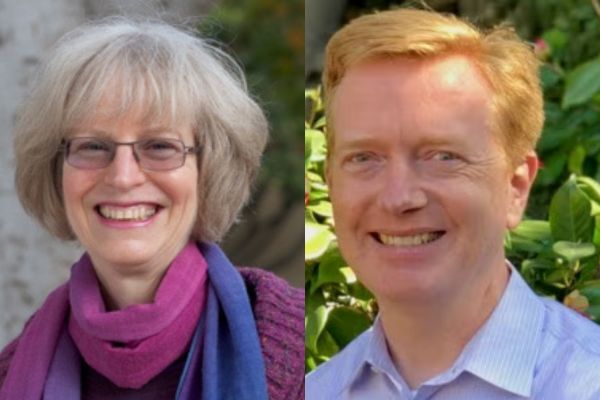
Right to left: Marjorie Harness Goodwin (anthropology) and Jeffrey Lewis (political science).
Distinguished research professor of anthropology Marjorie Harness Goodwin and Professor of Political Science Jeffrey Lewis have been selected to the American Academy of Arts, one of the nation’s most prestigious honorary societies. They are among four UCLA faculty and nearly 250 artists, scholars, scientists and leaders in the public, nonprofit and private sectors chosen for membership this year.
The academy serves as an independent research center convening leaders from across disciplines, professions and perspectives to address significant challenges, with the aim of producing independent and pragmatic studies that inform national and global policy and benefit the public.
They will be inducted in October at the academy’s headquarters in Cambridge, Massachusetts.
Marjorie Harness Goodwin
Distinguished research professor of anthropology
Goodwin, a linguistic anthropologist, focuses on how language, touch and other embodied practices shape human interactions. Her work has examined how members of children’s peer groups, families and workplace groups use everyday language and communication to construct social order, express intimacy and navigate ideas about moral behavior. Through her research and influential books, including “The Hidden Life of Girls,” “He-Said-She-Said” and “Embodied Family Choreography,” Goodwin has helped advance our understanding of human social dynamics and the ways people use their language, their bodies and their emotions to manage relationships and create meaning.
Jeffrey Lewis
Professor of political science
Lewis, a political scientist, investigates foundational questions of democratic representation and develops innovative methods for analyzing political behavior. His research explores how preferences can be deduced from behavior. He is also a leading figure in political methodology, contributing tools that have reshaped how scholars study legislatures and electoral politics. As the curator of Voteview.com — a platform that provides free data and tools for analyzing roll call voting in the U.S. Congress — he helps advance public and scholarly understanding of ideological polarization and legislative behavior. Lewis has served as president of the Society for Political Methodology and as an editor of the American Political Science Review, helping to shape the direction of research in the discipline. Through his empirical rigor and public scholarship, Lewis has played a pivotal role in elevating both the accessibility and sophistication of political science research.
Read American Academy of Arts & Sciences announcement here.
Learn more via UCLA Newsroom coverage here.
Alharthi is UCLA’s first international student to win the famed scholarship and the 13th recipient in the university’s history

By Kayla McCormack
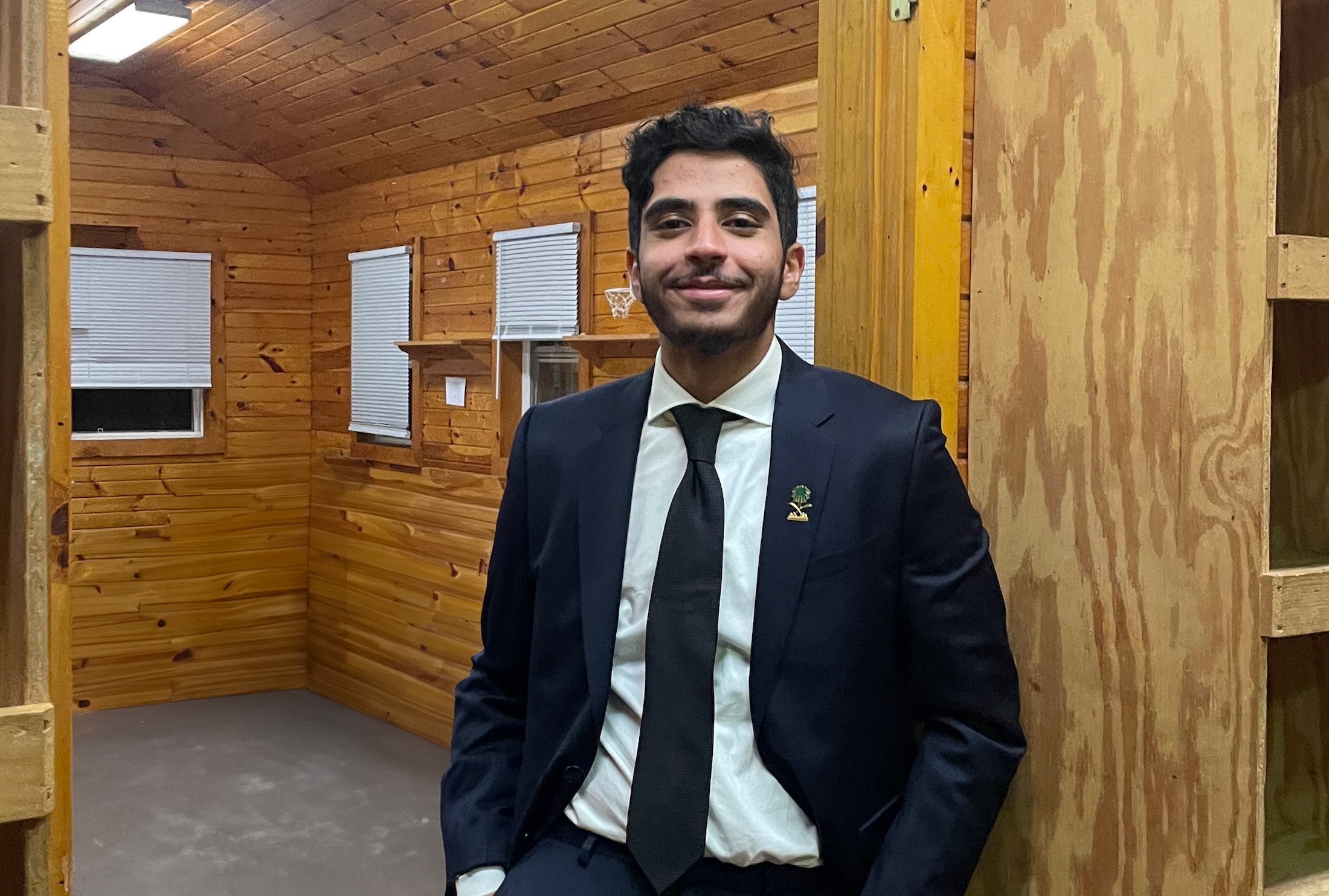
UCLA student Mohammed Alharthi, who will graduate in June 2025 with bachelor’s degrees in political science and mathematics/economics, has been awarded a Rhodes scholarship, widely considered the most prestigious and competitive award for international postgraduate study.
Next fall, Alharthi will join more than 100 other newly minted Rhodes scholars from around the world at the University of Oxford in the U.K., where he plans to pursue master’s degrees in diplomacy and global governance and in financial economics. The scholarship covers all expenses — including tuition, living and travel — for up to three years of study at Oxford.
Alharthi, who is from Saudi Arabia, is the first international student from UCLA to be chosen for the honor and the first UCLA-affiliated scholar selected since 2009. Each year, the Rhodes Trust awards scholarships to young men and women from 26 constituencies representing the U.S. and more than 70 other countries, along with two “global” recipients from countries outside those constituencies. Altharti applied for the scholarship through the Saudi Arabia constituency.
Created in 1902, the Rhodes scholarship supports students who have demonstrated academic excellence, a strong concern for the welfare of others and a commitment to making the world a better place. The program aims to develop public-spirited leaders and to promote global understanding and peace through an international community of scholars.
“I’ve always thought of myself as a public servant who understands his nation and the world,” Alharthi said. “The scholarship provides a passport to form lifetime relationships across the globe with some of the world’s most promising scholars and leaders, as we walk our paths at Oxford.”
At UCLA, Alharthi has immersed himself in campus life. An honors student interested in global policymaking and institution building, he has been active in the work of UCLA Center for Middle East Development and was appointed to the UCLA Academic Senate’s committee on international education by the Undergraduate Students Association Council. He has also served as the operations officer for the Saudi Arabian Students Association on campus.
“The weight of UCLA, with its long list of contributions to humanity, has only fueled the momentum to maximize what I get from this special Bruin moment,” Alharthi said.
Academically, Alharthi’s work as an undergraduate at UCLA has been exceptional, said assistant professor of political science Salma Mousa, who wrote him a letter of recommendation for the Rhodes application.
“Mohammed has designed and implemented an impressive honors thesis — scraping Arabic-language newspapers across the Middle East, using AI tools to analyze the content and sentiment of these articles, and ultimately measuring how foreign investment can shape soft power in the investors’ image,” she said. “In doing so, he is using modern methods to speak to basic questions about political economy in a data-poor region.
“I am thrilled to see Mohammed’s work and character be recognized in this way — a win for UCLA and the Arab world.”
Alharthi has also deepened his understanding of policy and economic development through off-campus study and research opportunities, including internships with international consulting firm McKinsey & Company; the United Nations Secretariat in New York, where he worked on global peace and security initiatives and sustainability issues; and the Saudi Industrial Development Fund. And this year, he co-founded Furas, a startup dedicated to expanding internship opportunities for young Saudis.
Alharthi’s application process was supported by the UCLA Center for Scholarships and Scholar Enrichment, which provides personalized guidance for students applying for competitive awards, including support in crafting applications, interview preparation and identifying funding opportunities.
This article, written by Kayla McCormack, originally appeared in the UCLA Newsroom.

By Kayla McCormack
Diego Sarmiento, a third-year political science major and public affairs minor, has won the Truman Scholarship. This marks the first time since 2009 that a UCLA student has been selected for this award.
The Truman Scholarship is awarded to college juniors committed to careers in public service. In addition to extensive support from the foundation, advising and mentoring opportunities, the scholarship provides up to $30,000 to fund graduate study.
“I see the Truman Scholarship as an investment in my future. I see this as the scholarship committee saying, ‘I see potential in you,’” says Sarmiento. “I just want to prove them right. It’s an honor to receive this award, but it’s also a privilege and I don’t plan to take that for granted.”
Originally a mathematics and economics major, his involvement in grassroots movements and local policy initiatives in his hometown of Santa Ana ignited his passion for political science and social justice, inspiring him to switch his major.
Reflecting on his journey, Sarmiento remarks, “Policy is so powerful, and it affects my life, my neighbors’ lives, and the lives of countless others. My local community-organizing work opened my eyes to the transformative potential of policy.”
Throughout his undergraduate studies, Sarmiento has continued to work in his local community advocating for various causes, from rent control ordinances to youth empowerment initiatives. He worked on a homeless prevention program at the Orange County Board of Supervisors, which provides $400 a month to 100 single-parent households and senior citizens on the brink of homelessness and eviction. His hands-on experience in community organizing and local policy, coupled with his academic pursuits, has equipped him with a unique perspective on bridging the gap between academic theory and grassroots activism.
Sarmiento plans to pursue a joint J.D. and master’s in public policy. Beyond graduate school, he hopes to dedicate his career to addressing systemic injustices and amplifying the voices of marginalized communities, particularly focusing on economic justice and reforming the influence of money in politics.
This fall, he’ll be running the Santanero Voter Initiative to mobilize Latinx youth voters in Santa Ana. After graduation in 2025, he plans to participate in the Truman Scholarship’s Summer Institute in Washington D.C. before starting graduate school.
As Sarmiento embarks on the next phase of his academic and advocacy journey, he’s hopeful about effecting change in the future.
“Change may be difficult, but it is possible,” he affirms. “Starting at the local level and building meaningful connections within communities can create change locally. And over time, that has the potential to snowball, grow and create an even bigger impact.”
For additional information about the Truman Scholarship or Strauss Scholarship, contact the Center for Scholarships & Scholar Enrichment.
This article originally appeared on the UCLA College Website.