Skip to Main Content

How you can help those impacted by the wildfires

Resources for the Bruin community to give and receive aid

UCLA Social Sciences

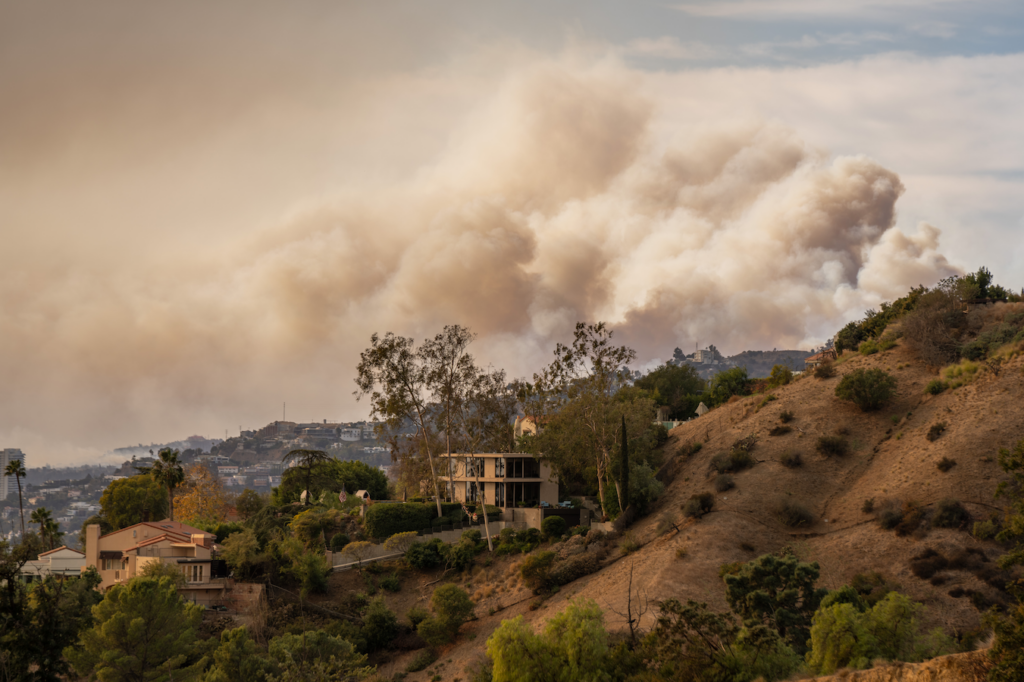
The current wildfires continue to have a devastating effect on Los Angeles County’s people and infrastructure. With thousands of residents displaced and many having lost their homes and businesses, UCLA and local organizations have mobilized to support both the campus community and the broader public.

As UCLA continues to focus on protecting its students, faculty, staff and their loved ones, the university is also encouraging those who are able to donate funds and supplies and to volunteer to aid in relief and recovery. More information as to how to get involved and additional campus resources can be found here.

L.A. fires: UCLA campus updates and resources

The latest on the status of campus operations, instruction and emergency plans for the Bruin community

UCLA/David Esquivel

UCLA Social Sciences

On Jan. 12, the UCLA Newsroom launched a wildfire information microsite to centralize fire-related resources and campus operational updates, FAQs for students, faculty and staff.

The site is being updated regularly with the latest information. Visit UCLA’s L.A. Fires webpage here.

Five UCLA College professors elected to American Academy of Arts and Sciences

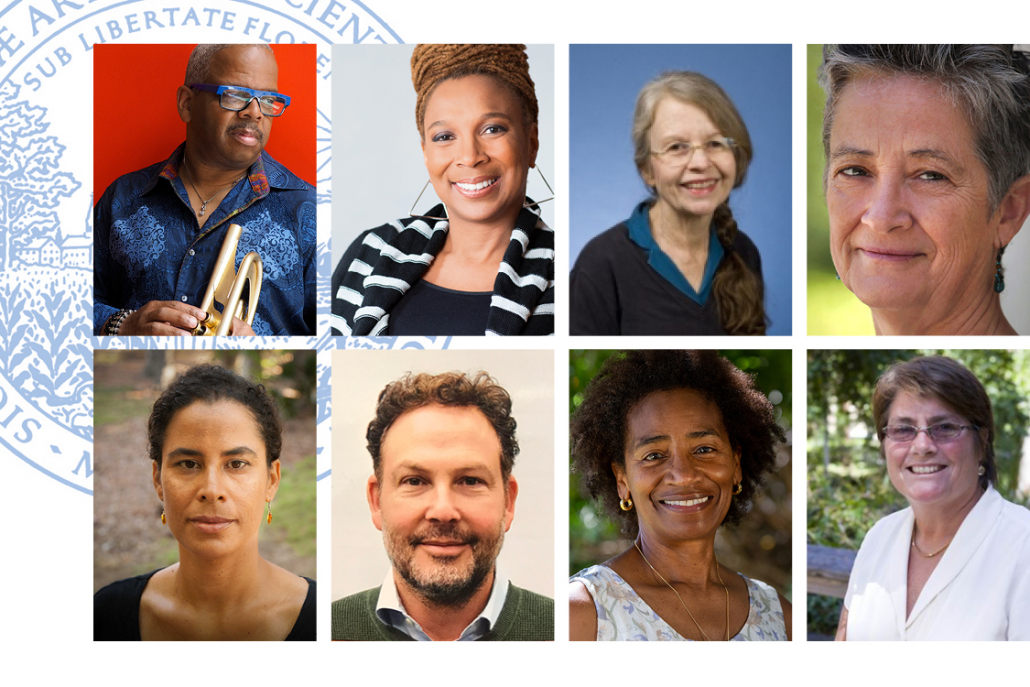
UCLA 2021 AAAS members Top row: UCLA professors Terence Blanchard, Kimberlé Crenshaw, Barbara Geddes and Elisabeth Le Guin. Bottom row: UCLA professors Kelly Lytle Hernández, Daniel Posner, Marilyn Raphael and Victoria Sork. (Photos Courtesy of UCLA)
UCLA 2021 AAAS members
Top row: UCLA professors Terence Blanchard, Kimberlé Crenshaw, Barbara Geddes and Elisabeth Le Guin.
Bottom row: UCLA professors Kelly Lytle Hernández, Daniel Posner, Marilyn Raphael and Victoria Sork. (Photos Courtesy of UCLA)
UCLA 2021 AAAS members Top row: UCLA professors Terence Blanchard, Kimberlé Crenshaw, Barbara Geddes and Elisabeth Le Guin. Bottom row: UCLA professors Kelly Lytle Hernández, Daniel Posner, Marilyn Raphael and Victoria Sork. (Photos Courtesy of UCLA)

By Stuart Wolpert

Eight faculty members, five of whom are from the UCLA College were elected today to the American Academy of Arts and Sciences, one of the nation’s most prestigious honorary societies. A total of 252 artists, scholars, scientists and leaders in the public, nonprofit and private sectors were elected to the academy today, including honorary members from 17 countries.

UCLA College’s 2021 honorees are:

Barbara Geddes, professor emeritus and former chair of political science, conducts research on the breakdown of authoritarian regimes, democratization, authoritarian transitions and political development, with a focus on Latin American politics. Geddes’ early work included studies of bureaucratic reform and corruption in Brazil and the politics of economic policy-making in Latin America. Early conclusions from her research about regime duration and modes of transition were published in “What Do We Know about Democratization after Twenty Years, Annual Review of Political Science 2” (1999). Geddes also published a book on comparative political research methods called “Paradigms and Sand Castles: Theory Building and Research Design in Comparative Politics” (2003).

Kelly Lytle Hernández, a professor of history and African American studies, is the director of UCLA’s Ralph J. Bunche Center for African American Studies. Lytle Hernández was awarded a 2020 MacArthur Fellowship from the John D. and Catherine T. MacArthur Foundation, which said her research on “the intersecting histories of race, mass incarceration, immigration, and cross-border politics is deepening our understanding of how imprisonment has been used as a mechanism for social control in the United States.” One of the nation’s leading experts on race, immigration and mass incarceration, she is the author of the award-winning books, “Migra! A History of the U.S. Border Patrol” (University of California Press, 2010), and “City of Inmates: Conquest, Rebellion, and the Rise of Human Caging in Los Angeles” (University of North Carolina Press, 2017). She holds UCLA’s Thomas E. Lifka Chair in History, and is the principal investigator for Million Dollar Hoods, a university-based, community-drive research project that maps the fiscal and human cost of mass incarceration in Los Angeles.

Daniel Posner, UCLA’s James S. Coleman Professor of International Development, focuses his political science research on ethnic politics, research design, distributive politics and the political economy of development in Africa. His most recent co-authored book, “Coethnicity: Diversity and the Dilemmas of Collective Action,” (Russell Sage, 2009) employs experimental games to probe the sources of poor public goods provision in ethnically diverse communities. His first book was “Institutions and Ethnic Politics in Africa.” (Cambridge, 2005). He is the co-founder of the Working Group in African Political Economy, a member of the Evidence in Governance and Politics network, a faculty associate of the Center for Effective Global Action and a research affiliate of the International Growth Center.

Marilyn Raphael, professor of geography and interim director of the UCLA Institute of the Environment and Sustainability, is the co-author of the award-winning book “The Encyclopedia of Weather and Climate Change: A Complete Visual Guide,” and the author or co-author of more than 60 peer-reviewed journal articles. Raphael was elected vice president of the American Association of Geographers, the world’s largest geography society effective July 1 of this year. Her research expertise includes atmospheric circulation dynamics, Antarctic sea ice variability and global climate change. She has been committed to introducing undergraduates to the world of climatology and graduate students to the joys of research.

Victoria Sork, is a distinguished professor of ecology and evolutionary biology and a renowned plant evolutionary biologist. Sork was award the 2020 Molecular Ecology Prize, which recognizes an outstanding scientist who has made significant contributions to the field. Elected in 2004 as a fellow of the American Association for the Advancement of Science, she has conducted pioneering research in the field of landscape genomics, which integrates genomics, evolutionary biology and conservation science. She is particularly concerned with the ecological and genetic processes that will determine whether California oaks will tolerate climate change. She and members of her laboratory conduct research throughout California and Western North America from Baja California through Alaska. Research she led in 2019 examines whether the trees being replanted in the wake of California’s fires will be able to survive a climate that is continuing to warm.

Other UCLA 2021 honorees are:

Terence Blanchard, a six-time Grammy-winning jazz trumpeter, composer and music educator, holds UCLA’s Kenny Burrell Chair in Jazz Studies in UCLA’s Herb Alpert School of Music. Blanchard has released 20 solo albums and composed more than 60 film scores. Blanchard served as artistic director of the Thelonious Monk Institute of Jazz (now named the Herbie Hancock Institute of Jazz) from 2000 to 2011. In this role, he presented masterclasses and worked with students in the areas of artistic development, arranging, composition and career counseling. Today, the institute partners with music school to offer the Herbie Hancock Institute of Jazz Performance at UCLA, a special college-level program that allows masters of jazz to pass on their expertise to the next generation of jazz musicians.

Elisabeth Le Guin, professor of musicology in the UCLA Herb Alpert School of Music, is a Baroque cellist, and was a founding member of Philharmonia Baroque Orchestra and the Artaria String Quartet. In recent years, Le Guin has become involved in the movimiento jaranero, a transnational grassroots musical activism in Mexico and Mexican immigrant communities in the United States. She has written two books, “Boccherini’s Body: an Essay in Carnal Musicology” (2006) and “The Tonadillo in Performance: Lyric Comedy in Enlightenment Spain” (2014), both published by UC Press. She received the American Musicological Society’s Alfred Einstein and Noah Greenberg Awards. She re-started UCLA´s Early Music Ensemble in 2009 after a 15-year hiatus.

Kimberlé Crenshaw, a distinguished professor of law in the UCLA School of Law, is an expert on race and the law, structural racism and discrimination based on race, gender and class. A renowned scholar on civil rights and constitutional law, Crenshaw was a founder and has been a leader in the intellectual movement called critical race theory. She is the executive director of the African American Policy Forum, an innovative think tank connecting academics, activists and policy-makers to dismantle structural inequality and engage new ideas and perspectives to transform public discourse and policy. Crenshaw coined the term “intersectionality” more than 30 years ago to describe how race, class, gender, and other individual characteristics “intersect” with one another and overlap.

“We are honoring the excellence of these individuals, celebrating what they have achieved so far and imagining what they will continue to accomplish,” said David Oxtoby, president of the academy. “The past year has been replete with evidence of how things can get worse; this is an opportunity to illuminate the importance of art, ideas, knowledge and leadership that can make a better world.”

The American Academy of Arts and Sciences was founded in 1780 by John Adams, John Hancock and others who believed the new republic should honor exceptionally accomplished individuals. Previous fellows have included George Washington, Benjamin Franklin, Alexander Hamilton, Ralph Waldo Emerson, Albert Einstein, Charles Darwin, Winston Churchill, Martin Luther King Jr., Nelson Mandela and UCLA astrophysicist Andrea Ghez.

It also is an independent policy research center that undertakes studies of complex and emerging problems. Current academy members represent today’s innovative thinkers in many fields and professions, including more than 250 Nobel and Pulitzer Prize winners.

This article, written by Stuart Wolpert, originally appeared in the UCLA Newsroom.

Center for Community Engagement Debuts New Name, new Website, and Campus Database for Community Partnerships

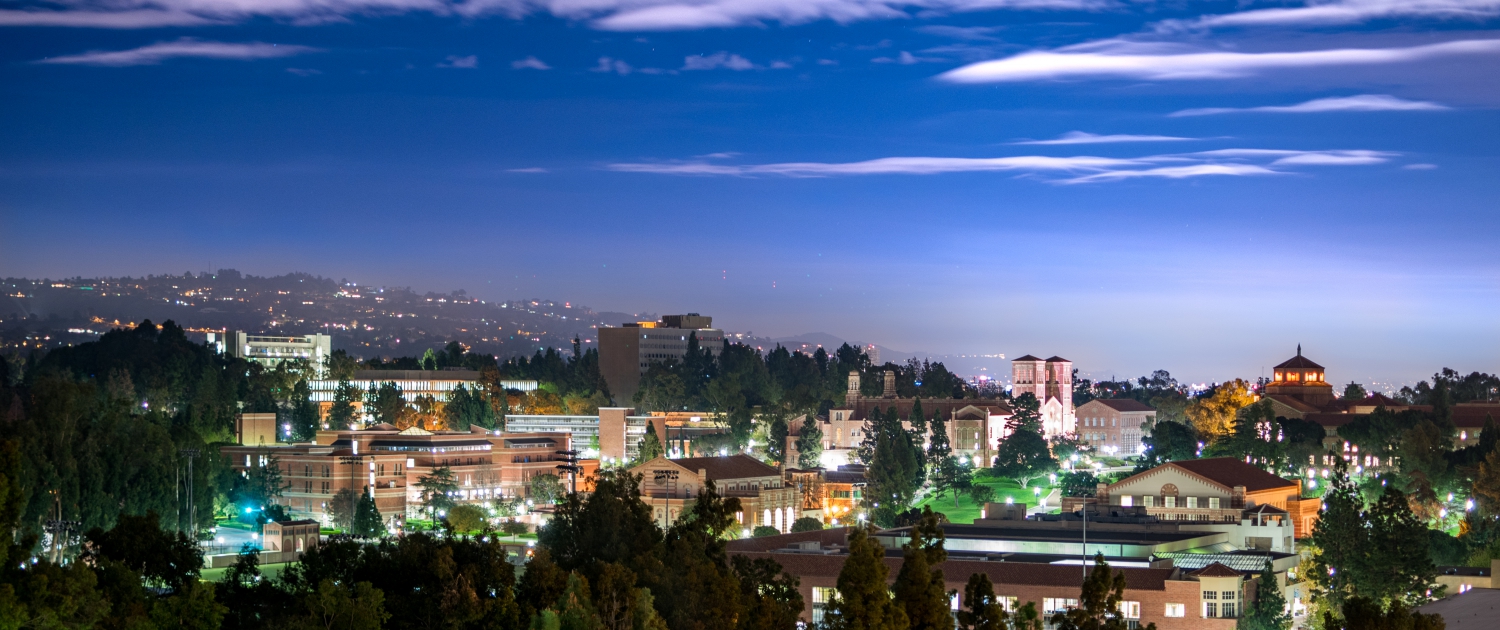
ucla campus at night

The UCLA Center for Community Learning has a new name.

As of November 10, the Center will be known as the UCLA Center for Community Engagement, reflecting the Center’s continued goal to connect UCLA students with community partners to provide both a learning experience for students and a benefit to the communities, locally and globally.

The Center for Community Engagement promotes and supports community-engaged research, teaching and learning in partnership with communities and organizations throughout Los Angeles, regionally, nationally and globally. The Center facilitates faculty and student work that integrates sustained, reciprocal engagement with the public and helps transform UCLA’s mission to support the cocreation, codissemination, copreservation and coapplication of knowledge.

The Center is tasked by the Undergraduate Council to administer the university’s “community-engaged course” framework. It does this by supporting faculty across the university who are interested in developing such community-engaged courses, and ultimately approving the “XP” course suffix that identifies these courses.

A recipient of the Chancellor’s Award for Community-Engaged Scholars, Gaye Theresa Johnson, meeting with cilantro workers as part of her ongoing community-engaged research on food justice. (Photo Credit: UCLA)

The Center also coordinates the Chancellor’s Awards for Community-Engaged Scholars, a program that recognizes outstanding scholarship and supports faculty to develop new courses to integrate undergraduates into their ongoing community-engaged research. The Center’s student-facing programming includes 195CE internship courses, the community engagement and social change minor, the Astin Community Scholars research program, the Changemaker Scholars program, and AmeriCorps volunteer programs.

The name change was inspired by Executive Vice Chancellor and Provost Emily A. Carter at a meeting last year with the vice chancellors and Chancellor Gene Block. Center for Community Learning director Shalom Staub and Vice Provost for International Studies and Global Engagement Cindy Fan gave a presentation about UCLA’s new strategic priorities for local and global engagement.

Staub said Carter took note of the reciprocal nature of the Center’s community-engaged programs. She noticed that the Center’s name only notes the value for student learning but ignores the ways that the work is intentionally designed to create value for community partners. The name “Center for Community Learning” didn’t convey both sides, she said.

“This name change highlights the importance of meaningful engagement as the cornerstone of effective community-based research and education,” Carter said. “It is a stronger reflection of the center’s philosophy and work, and it emphasizes the idea that our relationships with communities and organizations throughout Los Angeles are true reciprocal partnerships.”

Dean of Undergraduate Education Adriana Galvan said the new name represents the meaningful learning and authentic community-engaged experiences students have with community partners as well as UCLA’s commitment to creativity, community engagement, research, and learning across disciplines.

“Community engagement is a crucial ingredient to the undergraduate experience because it brings to life the learning that happens in a classroom and ensures that our students have the opportunity to reflect on the ways in which the university connects to the broader community,” she said.

In addition to the name change, the Center launched a new website and will soon debut a new online database of community engaged work at UCLA. Through an online platform called Collaboratory, community-centered research or teaching at UCLA will be logged, categorized and searchable, allowing users to see how community-engaged work at UCLA is connected across campus and across community partner organizations.

“Rather than talk abstractly about community-engaged work, or rather than describe just the work of a specific course, this is going to allow us to aggregate and to visualize community-engaged work at UCLA,” Staub said. “The scale and scope of this work is going to start to become much more real.”

This article was written by Robin Migdol. 

Birthrates, marriage, gender roles will change dramatically in post-pandemic world, scientists predict

photo of a couple at the beach

COVID-19 and America’s response to it are likely to profoundly affect our families, work lives, relationships and gender roles for years, say 12 prominent scientists and authors who analyzed 90 research studies and used their expertise to evaluate our reaction to the pandemic and predict its aftermath.

The group, which included three UCLA researchers, foresees enduring psychological fallout from the crisis, even among those who haven’t been infected. Their predictions and insights, published Oct. 22 in the journal Proceedings of the National Academy of Sciences, include:

  • Planned pregnancies will decrease in a disease-ridden world, birthrates will drop, and many couples will postpone marriage, said senior author and UCLA professor of psychology and communication studies Martie Haselton.
  • People who are single are less likely to start new relationships. Women who can afford to be on their own are likely to stay single longer, Haselton said.
  • With children home due to the pandemic, women are spending more time providing care and schooling, are less available for paying work and may come to rely more on male partners as breadwinners, Haselton said. This will push us toward socially conservative gender norms and potentially result in a backslide in gender equality.
  • Unlike many past crises, this pandemic is not bringing people closer together and, despite some exceptions, it is not producing an increase in kindness, empathy or compassion, especially in the U.S., said lead author Benjamin Seitz, a UCLA psychology doctoral student with expertise in behavioral neuroscience.
  • “Our species is not wired for seeking a precise understanding of the world as it actually is,” the authors write, and our tribal predispositions toward groupthink are resulting in the large-scale spread of misinformation We tend to seek out data that supports our opinions, and we too often distrust health experts, they say.

“The psychological, social and societal consequences of COVID-19 will be very long-lasting,” Haselton said. “The longer COVID-19 continues, the more entrenched these changes are likely to be.”

COVID-19: A worldwide social experiment

As marriage rates plummet and people postpone reproduction in a virus-plagued world, some nations’ populations will shrink and fall precipitously below “replacement level,” the authors write. These birthrate drops, in turn, can have cascading social and economic consequences, affecting job opportunities, straining the ability of countries to provide a safety net for their aging populations and potentially leading to global economic contraction.

Research has shown that even before the pandemic, women were more stressed than men by family and job responsibilities. Now they are managing more household responsibilities related to child care and education. In medicine and other sciences, women scholars are already publishing substantially less research than they did a year ago, while men are showing increased productivity, Haselton said.

She and her co-authors foresee a shift toward social conservatism. A consequence of the pandemic could be less tolerance for legal abortion and the rights for sexual minorities who don’t align with traditional gender roles. In addition, in a time of economic inequality, many women will sexualize themselves more to compete with one another for desirable men, Haselton said.

People who meet online will often be disappointed when they meet in person. “Does a couple have chemistry? You can’t tell that over Zoom,” Haselton said. In new relationships, people will miss cues, especially online, and the disappointing result will often be overidealization of a potential partner — seeing the person the way you want the person to be rather than the way the person actually is.

The pandemic has become a worldwide social experiment, say the authors, whose areas of expertise include psychology, neuroscience, behavioral science, evolutionary biology, medicine, evolutionary social science and economics.

An evolutionary struggle

For the study, the authors used an evolutionary perspective to highlight the strategies the virus has evolved to use against us, the strategies we possess to combat it and the strategies we need to acquire.

Humans today are the products of social and genetic evolution in environments that look very little like our current world. These “evolutionary mismatches” are likely responsible for our frequent lack of alarm in response to the pandemic, the scientists write.

Americans in particular value individuality and the ability to challenge authority. “This combination does not work especially well in a pandemic,” Seitz said. “This virus is exposing us and our weaknesses.”

Haselton agreed, calling the virus “wily” for its ability to infect us through contact with people we love who seem to be healthy. “Our social features that define much of what it is to be human make us a prime target for viral exploitation,” she said. “Policies asking us to isolate and distance profoundly affect our families, work lives, relationships and gender roles.”

All infectious agents, including viruses, are under evolutionary pressure to manipulate the physiology and behavior of their hosts — in this case, us — in ways that enhance their survival and transmission. SARS-CoV-2, which causes COVID-19, may be altering human neural tissue to change our behavior, the authors say. It may be suppressing feelings of sickness, and perhaps even enhancing our social impulses, during times of peak transmissibility before symptoms appear. People who are infected but do not feel sick are more likely to go about their usual activities and come in contact with others whom they might infect.

Disgust is useful and motivates us to avoid people who display clear signs of disease — such as blood, pale skin, lesions, yellow eyes or a runny nose. But with COVID-19 infections, this is not what most people see. Family, friends, co-workers and strangers can look perfectly healthy and be asymptomatic for days without knowing they are infected, the authors note.

It may sound counterintuitive, but normal brain development requires exposure to a diverse set of microbes to help prepare younger animals for a range of pathogenic dangers they may encounter in adulthood. But safer-at-home and quarantine health measures have temporarily halted social activities that would otherwise bring millions of adolescents into contact with new microbes. As a result, children and adolescents whose immune systems and brains would, in normal times, be actively shaped by microbial exposures may be adversely impacted by this change, the scientists say.

By understanding how SARS-CoV-2 is evolving and having behavioral and psychological effects on us that enhance its transmission, we will be better able to combat it so it becomes less harmful and less lethal, the authors write.

Other co-authors of the study are Steven Pinker of Harvard University, bestselling author Sam Harris, Barbara Natterson-Horowitz of the David Geffen School of Medicine at UCLA, Paul Bloom of Yale University, Athena Aktipis of Arizona State University, David Buss of the University of Texas, Joe Alcock of the University of New Mexico, Michele Gelfand of the University of Maryland and David Sloan Wilson of the State University of New York at Binghamton.

This article, written by Stuart Wolpert, originally appeared in the UCLA Newsroom

Voters in both parties favor caution as cities begin to reopen

“Our research has revealed a nation largely in agreement on everything from preventive measures to thoughts about returning to normal activities,” said UCLA political science professor Lynn Vavreck. (Photo Credit: Sean Brenner)

Over the weekend of May 9–10, many states, including California, began to ease safer-at-home restrictions, allowing some businesses to reopen under strict conditions, and opening some public spaces, including hiking trails and beaches.

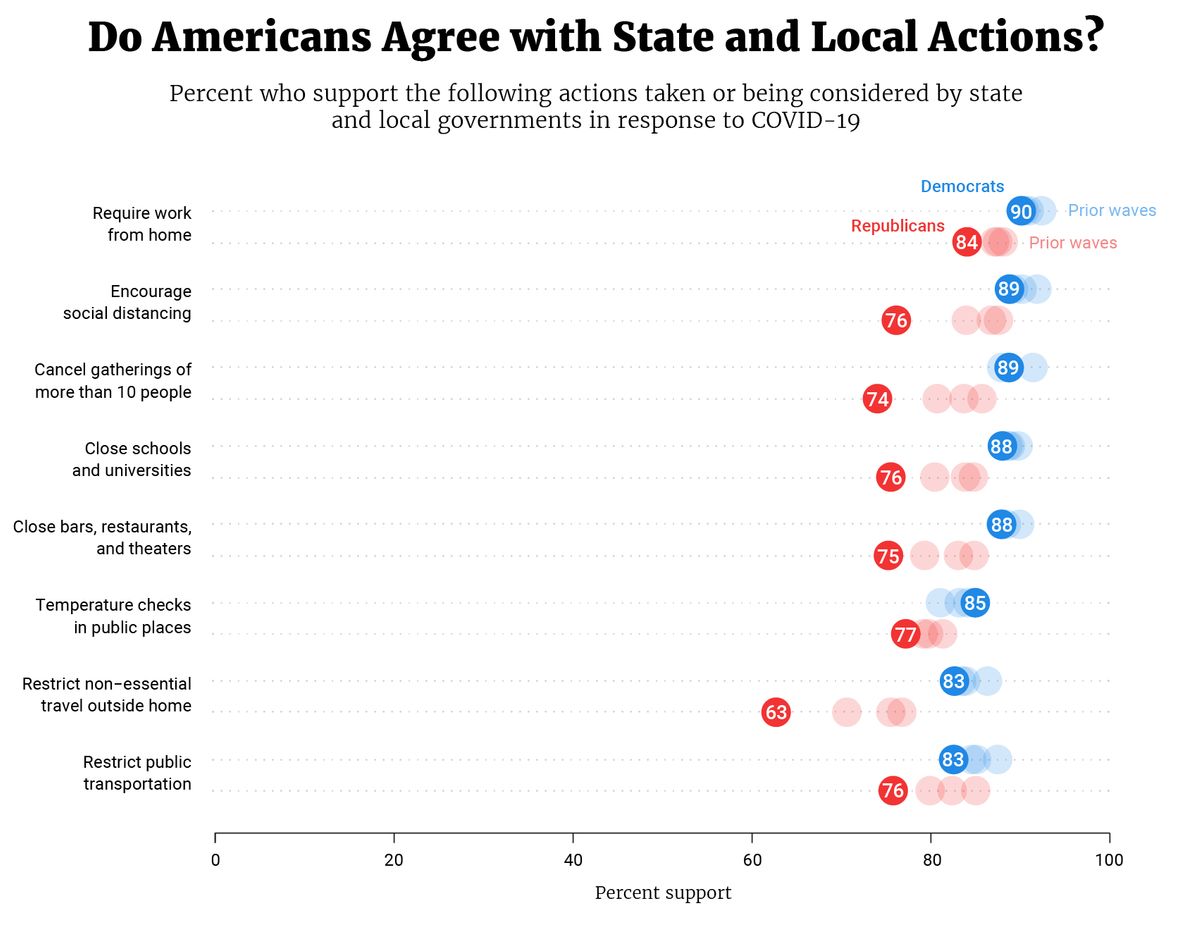
Now, a weekly survey co-led by UCLA political science professors Lynn Vavreck and Chris Tausanovitch has found that Democratic and Republican voters favor the restrictions that were enacted to slow the spread of COVID-19. And by and large, people prefer a cautious approach to getting life back to normal.

The UCLA + Democracy Fund Nationscape survey began adding COVID-19–related questions in March, shortly after businesses, schools and events began shutting down. Topics include Americans’ beliefs, worries and behaviors related to the pandemic. The survey will post results each week on a new coronavirus-specific page of its website.

“Our research has revealed a nation largely in agreement on everything from preventive measures to thoughts about returning to normal activities,” Vavreck said. “Far from the partisan division that has described the last several years, nearly everyone has incorporated precautions against the virus into their daily lives and most people support government interventions to stop its spread.”

The study was quickly noticed by government leaders. Sen. Ben Cardin of Maryland referenced the findings during remarks on the Senate floor on May 13.

A graphic of the Democracy Fund + UCLA Nationscape Survey.

A majority of voters surveyed agree with measures local and state governments have implemented to slow the spread of COVID-19. (Faded dots represent results from previous weeks. Data collected March 19 through April 29, 2020.) (Democracy Fund + UCLA Nationscape Survey)

Researchers also surveyed respondents about the economic pain caused by COVID-19. Of respondents who earn less than $25,000 per year, 26% reported that their income has been reduced significantly due to the crisis, and 24% have lost their primary source of income entirely. Among those earning more than $85,000 annually, 23% reported significant income loss but just 8% indicated that they had lost their income entirely.

► Read more about UCLA + Democracy Fund Nationscape

Vavreck is an expert on presidential elections; her previous research has shown that a good economy is often critical to a president’s reelection chances.

“As we head into the presidential election, we will continue to chart how the government’s response to the pandemic will affect the way voters view an incumbent president presiding over an unexpected downturn in the American economy,” Vavreck said.

This article originally appeared in the UCLA Newsroom.