
The fellowship is the nation’s largest and most prestigious award for PhD candidates in the humanities and social sciences addressing questions of religion, ethics, morals, or values
UCLA Social Sciences
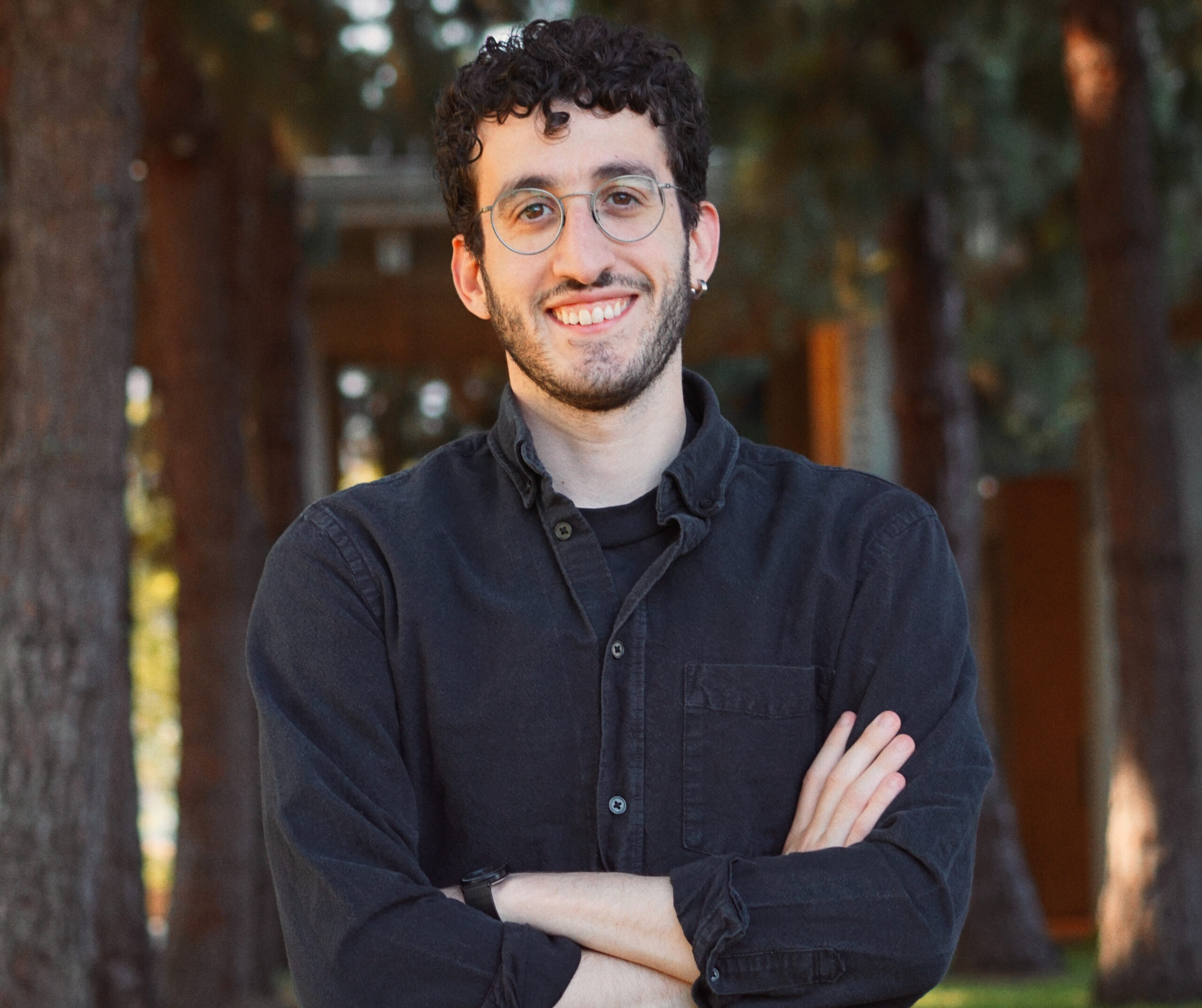
The Charlotte W. Newcombe Foundation has named Paul Melas, a doctoral candidate in UCLA’s Department of Anthropology, a 2026 Charlotte W. Newcombe Doctoral Dissertation Fellow. Melas is one of 20 doctoral candidates selected nationwide to receive a $31,000 stipend for focused dissertation writing during the 2026–2027 academic year.
Established in 1981, the Newcombe Doctoral Dissertation Fellowship supports work engaging ethical, religious and values-based inquiry that demonstrates nuance, depth and intellectual sophistication. Selected projects may be from the ancient past, with modern relevance or focus on a unique perspective on a well-known topic. The award is considered the nation’s largest and most prestigious award for PhD candidates in the humanities and social sciences addressing questions of religion, ethics, morals or values.
Melas’ dissertation considers monastic asceticism in Contemporary Greece, a thousand-year-old community traditionally perceived as insulated from global networks and contemporary social problems. Melas challenges this notion through his long-term immersive fieldwork in the Orthodox Christian monasteries of Mount Athos taking on the arduous and ascetic routines of a monk while following questions of care, ethics and labor within the peninsula. Through his immersion, Melas came to know not only the monks and the clerical hierarchy but also the migrant laborers who worked for or alongside them to sustain daily life and the material infrastructure of the monasteries
“Paul’s grounded ethnographic, theologically-informed and scholarly perspective has revolutionized our understanding of the individual and social impact of monastic life,” said Laurie Hart, professor and chair of UCLA’s Department of Anthropology and Melas’ research advisor. “Following the threads of human movement, material objects, ideas and ambitions, including trips to the Baltics and Uganda, he discovered that despite its famous “isolation,” Mount Athos is not only a spiritual refuge but also part of a national and global network of political and ideological importance to Eastern Orthodoxy internationally.”
Melas’ said his project ultimately seeks to understand how these ascetic traditions, with histories that frequently span millennia, become articulated within contemporary cultural formations and in response to emergent social challenges.
“Contemporary asceticism on Mount Athos cannot solely be understood as an attempt to reject and ‘withdraw’ from a world of moral distractions,” said Melas. “Its performance inevitably leads to the embrace of certain worldly and other-worldly connections and a re-working of one’s relational network. Through their asceticism, monks forge deep relationships with God and other divine figures, pilgrims who visit the community, wage-laborers employed in its economy and Orthodox Christians in parishes throughout Greece.”
Hart said Melas is a brilliant, dedicated scholar who is completely committed to research, teaching and human inquiry more broadly.
“The Charlotte Newcombe Fellowship is a perfect match — and a perfect community — for Paul as a young scholar headed to a career in the comparative anthropology of religion, globalization and social and cultural theory,” she said.
An immigrant and first-generation college student, Melas says he is grateful that his project, focused on anthropology of religion, is receiving national-scale attention.
“My goal is to pursue a career in academia that combines teaching, research and publishing,” he said. “I hope to bring ethnography and other social scientific methods to students who seek to understand the role of religion in their lives and communities.”
Media Contact: Citlalli Chávez-Nava, cchaveznava@college.ucla.edu.