
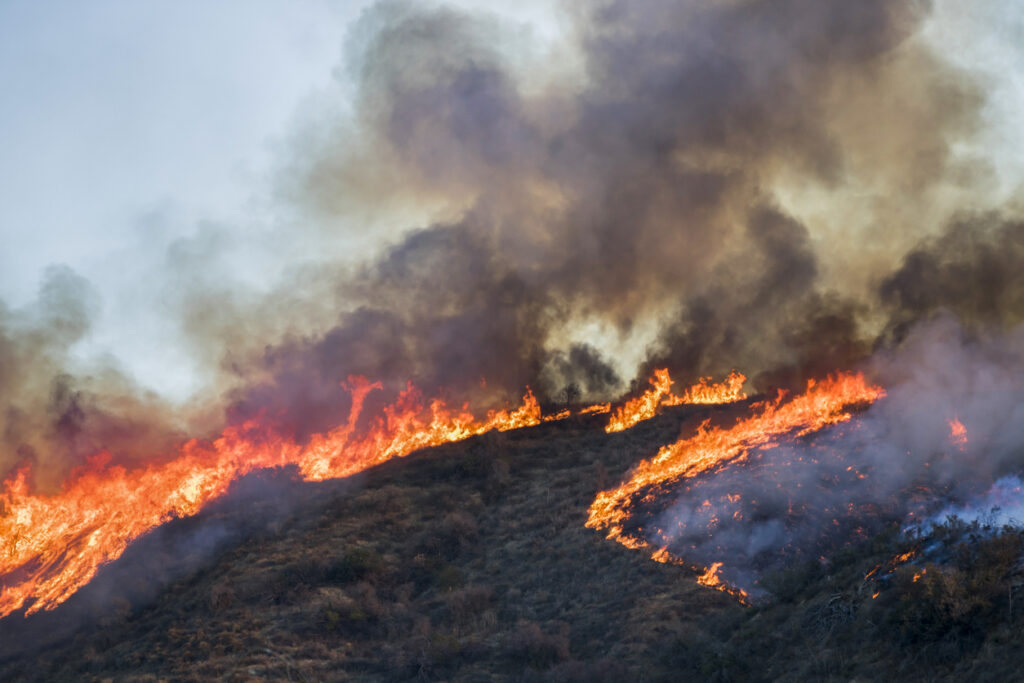
This brief is the first in a continuing analysis of the event. Upcoming publications will examine the full scope of wildfire impacts, affected workers, displaced jobs and small businesses.
UCLA LPPI
LOS ANGELES (January 10, 2025)—A new data brief from the UCLA Latino Policy and Politics Institute and the UCLA Center for Neighborhood Knowledge reveals that the Palisades, Hurst, and Eaton wildfires have far-reaching effects. They extend beyond evacuation zones to disproportionately impact Latino and other underserved communities across Los Angeles County and neighboring communities.
The brief reveals a stark truth about Latinos who work in outdoor occupations like construction, delivery, transportation, and agriculture: 17% of residents in Latino neighborhoods are employed in these sectors compared to just 6% in white neighborhoods. Wildfire smoke puts these workers at risk of respiratory illness and income loss due to work disruptions. Many outdoor workers may also experience income disruptions as their places of employment are destroyed or closed, and air quality plummets across the county.
Authored by Chhandara Pech, Dr. Silvia R. González, and Albert Kochaphum, the brief underscores urgent disparities in health, economic vulnerability, and preparedness, including:
- Health disparities: Latino neighborhoods experience nearly double the exposure to diesel and PM2.5 pollution compared to white neighborhoods, compounding the health risks of wildfire smoke. Asthma-related emergency room visits average 67 per 10,000 residents in Latino neighborhoods—over 2.5 times higher than in white neighborhoods (25 per 10,000).
- Lack of Preparedness: Latino households and small businesses often lack disaster plans or insurance coverage, leaving them financially unprepared. Nearly 30% of surveyed small businesses reported having no insurance for fire or natural disasters, limiting recovery options.
- Access to health care: With 14% of residents in Latino neighborhoods uninsured—compared to 3% in white neighborhoods—access to critical medical care during and after disasters remains a significant barrier.
“These findings show that wildfires exacerbate long-standing inequities, not just for Latinos, but for all underserved communities in Los Angeles County,” said Pech, deputy director of the UCLA Center for Neighborhood Knowledge.
“We must take immediate action to address these disparities through equitable disaster response, preparedness, and recovery efforts,” said Gonzalez, research director at UCLA LPPI.
The authors call for policy solutions such as expanding healthcare access, employer-mandated protections for outdoor workers, and investment in culturally responsive emergency preparedness programs to safeguard vulnerable populations countywide.
The full data brief can be read here.